 by our College Data Analytics Team
Biochemistry, Biophysics & Molecular Biology is a major offered under the biological and biomedical sciences program of study at Wake Forest University. We’ve gathered data and other essential information about the bachelor’s degree program in biochemistry, such as diversity of students, how many students graduated in recent times, and more.
You can jump to any section of this page using the links below:
In order to help students and their parents find the best school for them, we have created several different types of college rankings, which are updated yearly. Wake Forest University was ranked #64 on College Factual's most recent list of the best schools for biochemistry majors. This puts the bachelor's program at the school solidly in the top 15% of all colleges and universities in the country. It is also ranked #4 in North Carolina.
Here are some of the other rankings for Wake Forest University.
During the 2019-2020 academic year, part-time undergraduate students at Wake Forest University paid an average of $2,352 per credit hour. No discount was available for in-state students. The following table shows the average full-time tuition and fees for undergraduates.
| In State | Out of State | |
|---|---|---|
| Tuition | $56,722 | $56,722 |
| Fees | $1,038 | $1,038 |
| Books and Supplies | $1,500 | $1,500 |
| On Campus Room and Board | $15,520 | $15,520 |
| On Campus Other Expenses | $2,498 | $2,498 |
Learn more about Wake Forest University tuition and fees.
Wake Forest University does not offer an online option for its biochemistry bachelor’s degree program at this time. To see if the school offers distance learning options in other areas, visit the Wake Forest University Online Learning page.
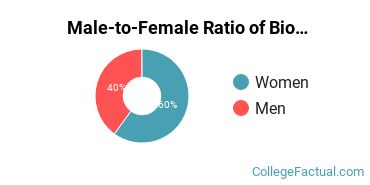
Women made up around 66.7% of the biochemistry students who took home a bachelor’s degree in 2019-2020. This is higher than the nationwide number of 54.9%.
Around 22.2% of biochemistry bachelor’s degree recipients at Wake Forest University in 2019-2020 were awarded to racial-ethnic minorities*. This is lower than the nationwide number of 40%.
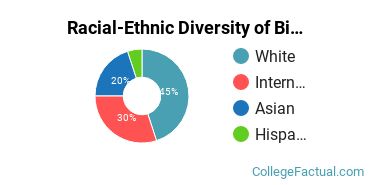
| Race/Ethnicity | Number of Students |
|---|---|
| Asian | 3 |
| Black or African American | 1 |
| Hispanic or Latino | 0 |
| Native American or Alaska Native | 0 |
| Native Hawaiian or Pacific Islander | 0 |
| White | 13 |
| International Students | 1 |
| Other Races/Ethnicities | 0 |
Biochemistry, Biophysics & Molecular Biology students may decide to major in one of the following focus areas.
| Focus Area | Annual Graduates |
|---|---|
| Biophysics | 2 |
| Biochemistry & Molecular Biology | 16 |
You may also be interested in one of these majors related to biochemistry, biophysics and molecular biology.
| Related Major | Annual Graduates |
|---|---|
| General Biology | 96 |
View All Biochemistry, Biophysics & Molecular Biology Related Majors >
*The racial-ethnic minorities count is calculated by taking the total number of students and subtracting white students, international students, and students whose race/ethnicity was unknown. This number is then divided by the total number of students at the school to obtain the racial-ethnic minorities percentage.
More about our data sources and methodologies.