 by our College Data Analytics Team
Lees - McRae College total enrollment is approximately 838 students. 788 are undergraduates and 2 are graduate students.
Male/Female Breakdown of Undergraduates
The full-time Lees - McRae College undergraduate population is made up of 66% women, and 34% men.
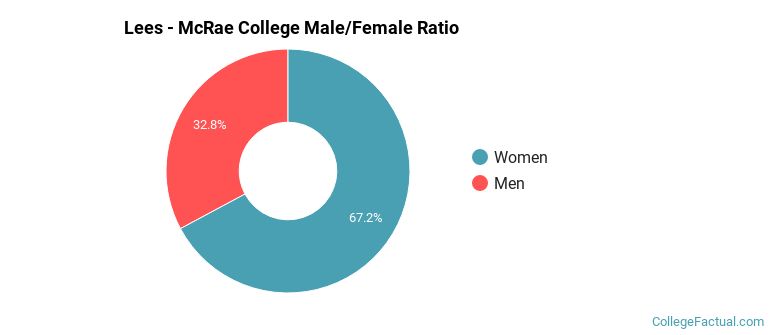
For the gender breakdown for all students, go here.
Lees - McRae College Racial/Ethnic Breakdown of Undergraduates
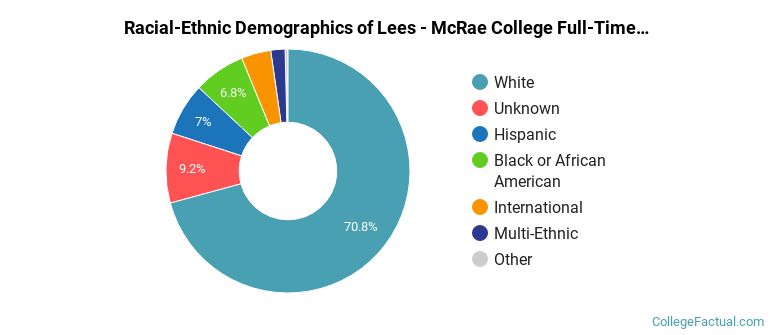
| Race/Ethnicity | Number |
|---|---|
| White | 576 |
| Black or African American | 59 |
| Unknown | 59 |
| Hispanic | 43 |
| International | 23 |
| Multi-Ethnic | 18 |
| Asian | 6 |
| Native Hawaiian or Pacific Islander | 0 |
See racial/ethnic breakdown for all students.
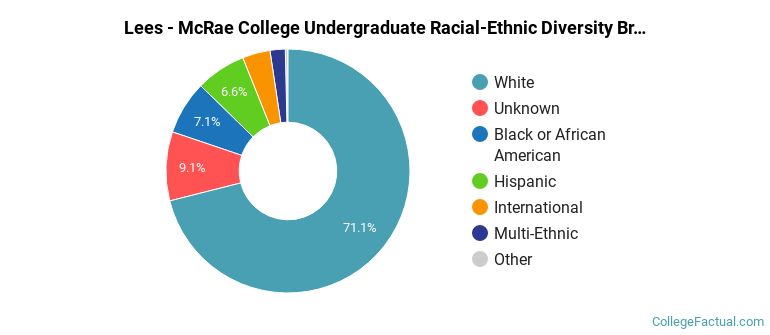
| Race/Ethnicity | Number |
|---|---|
| White | 611 |
| Black or African American | 67 |
| Unknown | 61 |
| Hispanic | 46 |
| International | 25 |
| Multi-Ethnic | 18 |
| Asian | 6 |
| Native Hawaiian or Pacific Islander | 0 |
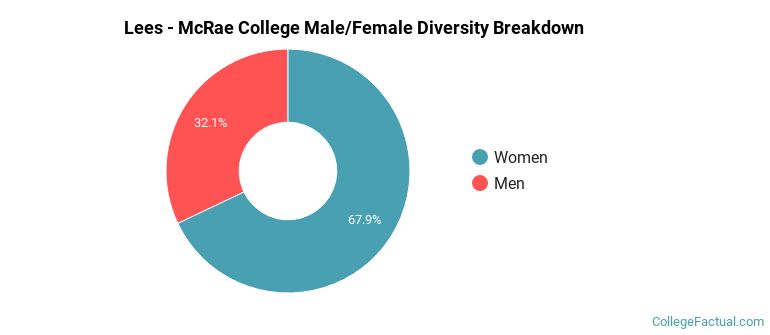
There are approximately 557 female students and 281 male students at Lees - McRae College.
Lees - McRae College ranks 664 out of 2,183 when it comes to geographic diversity.
38.2% of Lees - McRae College students come from out of state, and 4.81% come from out of the country.
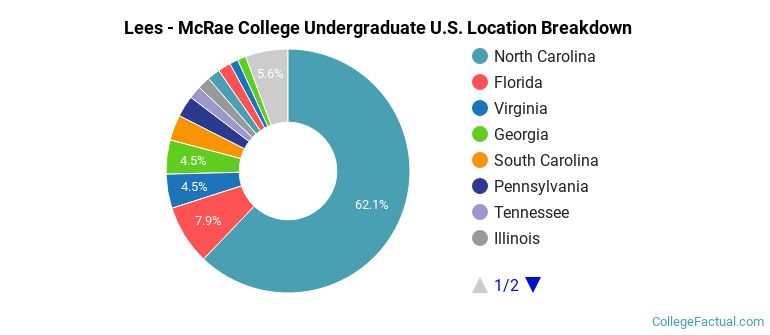
The undergraduate student body is split among 22 states (may include Washington D.C.). Click on the map for more detail.
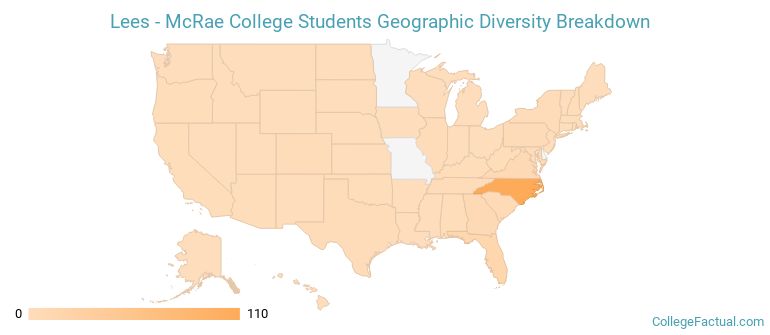
| State | Amount |
|---|---|
| North Carolina | 110 |
| Florida | 14 |
| Georgia | 8 |
| Virginia | 8 |
| South Carolina | 6 |
Students from 15 countries are represented at this school, with the majority of the international students coming from United Kingdom, Canada, and Bahamas.
Learn more about international students at Lees - McRae College.
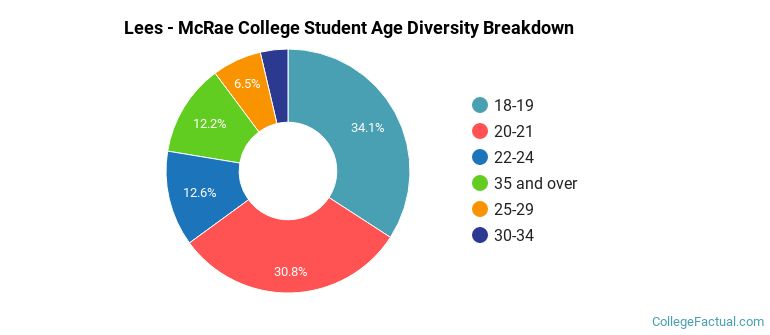
A traditional college student is defined as being between the ages of 18-21. At Lees - McRae College, 63.63% of students fall into that category, compared to the national average of 60%.
| Student Age Group | Amount |
|---|---|
| 18-19 | 308 |
| 20-21 | 278 |
| 22-24 | 114 |
| 35 and over | 110 |
| 25-29 | 59 |
| 30-34 | 33 |
| Under 18 | 0 |
Footnotes
*The racial-ethnic minorities count is calculated by taking the total number of students and subtracting white students, international students, and students whose race/ethnicity was unknown. This number is then divided by the total number of students at the school to obtain the racial-ethnic minorities percentage.
References
Department of Homeland Security Citizenship and Immigration Services
Find out how College Factual created their Diversity Rankings.